Temu

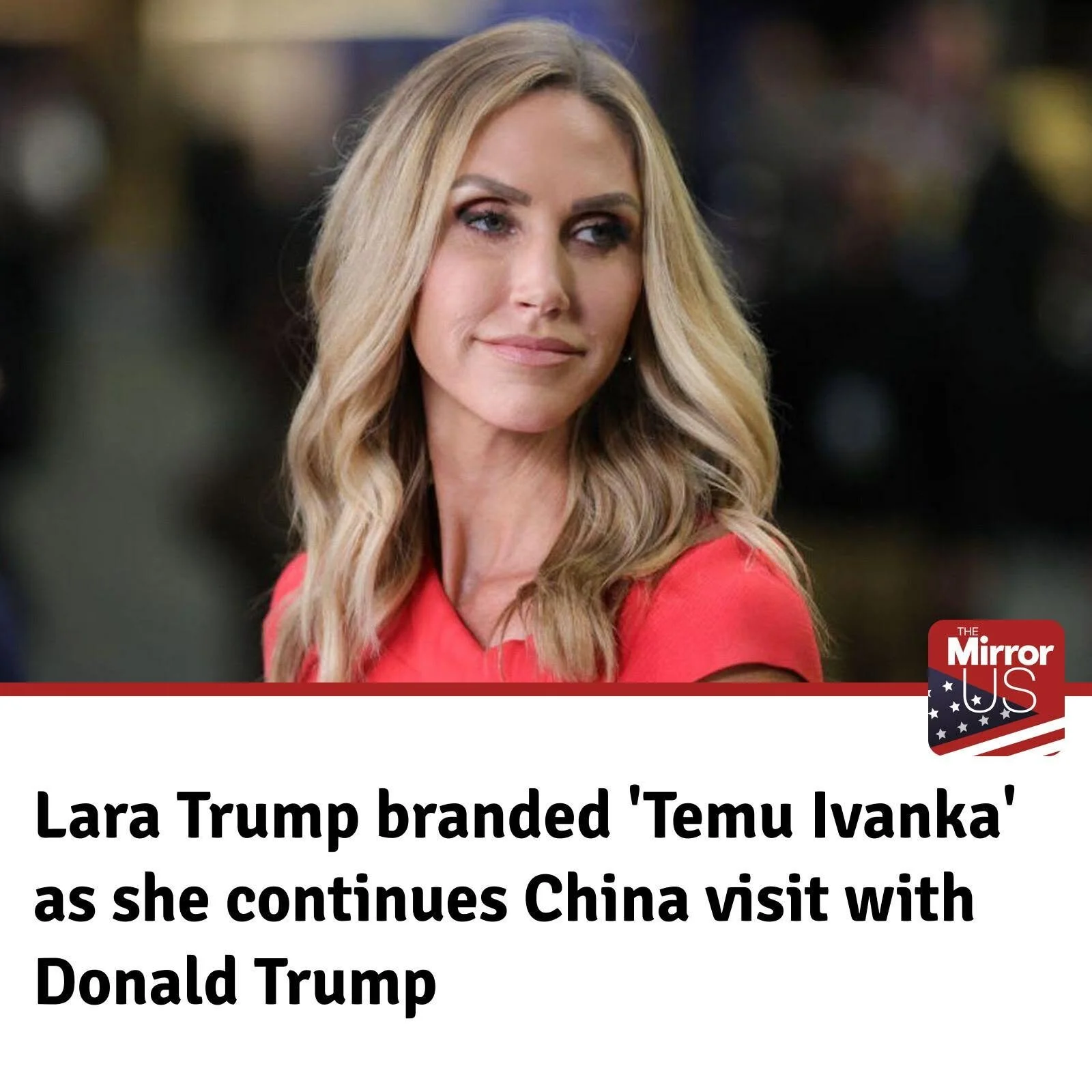
Photo of a blond woman with the caption, “Lara Trump branded ‘Temu Ivanka’ as she continues China visit with Donald Trump”

Photo and headline from the Mirror, posted to Facebook on 14 May 2026

7 August 2026

Temu is a rather new adjective meaning second rate, of poor quality, and it is often applied in a political context, critiquing the powers that be. It comes from the name of the online retailer. Temu launched September 2022 offering low-priced, and often low-quality, goods shipped directly to consumers from China. The name Temu is an abbreviated form of the company’s Mandarin motto, which translates as team up, price down.

The phrase temu brand to refer to a cheap knock-off is in place by 12 August 2023 when it appears in this tweet referring to some type of multi-level marketing scam relating to pornography on Only Fans:

contacted out of curiosity, and got invited to some temu brand hustler's university focused on exploiting OF models.

And we get the adjective Temu, without the brand, in a 29 November 2023 tweet:

oomf calling ghostmaker a temu batman has had me giggling for the past few minutes

And there is this in a political context on Bluesky on 21 September 2024:

fun fact in 2009 my geology 101 professor was adamant that this would be the cause of the next civil war and while he missed “rise of Temu Fascism” he’s still not wrong

And here are a few more posted to Bluesky on 20 November 2024. One is in reply to a video clip of Donald Trump with a very bad fake tan:

What in the melted Temu Madame Tussauds is this?

Another waxed eloquent on the quality of Trump’s appointments:

trumps cabinet is clearly temu

And this non-political post commenting on a video of a well-built, muscular man:

At the gym so I can look like the TEMU version of this guy

Nor is the adjective restricted to American politics. Here’s one posted to Bluesky on 21 November 2024 critiquing the Australian government:

Bill Shorten was the PM we deserved

Instead, we were ripped off with Temu Morrison


Sources:

@amandasmith.bsky.social. Bluesky.com,  21 September 2024.

@cassandrasl00.bsky.social. Bluesky.com, 21 November 2024.

@dropgoats.bsky.social. Bluesky.com, 20 November 2024.

@fentyheffa. X.com, 29 November 2023.

@kenblazed1.bsky.social. Bluesky.com, 20 November 2024.

@saiyangodfps. X.com, 12 August 2023.

@wvusportschick.bsky.social. Bluesky.com 20 November 2024.

Faithfull, Mark. “7 Things to Know About Temu Before You ‘Shop Like a Billionaire.’” Forbes, 13 February 2024.

Green’s Dictionary of Slang, accessed 11 July 2026, s.v. Temu, adj. https://greensdictofslang.com/entry/tguzgmy

O’Toole, Garson. “Temu, adj. (2024).” ADS-L, 11 July 2026.

Image credit: The Mirror, 2026. Facebook.com, 14 May 2026. Fair use of a copyrighted image to illustrate the topic under discussion.
penguin

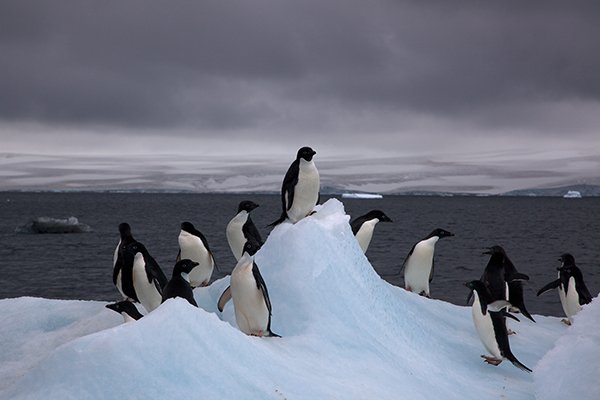
Photo of 13 penguins on an iceberg

Adelie penguins on an iceberg off Anvers Island in the Antarctic

5 August 2026

Penguins comprise a number of species of flightless sea birds of the family Spheniscidae, which, with one exception, inhabit the southern hemisphere. The exception is the Galapagos penguin, which dwells just north of the equator.

The name penguin seems to have been first applied to the great auk, a now extinct species of flightless sea bird that resembles, but is genetically unrelated to, the penguins we know today. Although the earliest use of the word in extant literature is a reference to penguins, not the great auk. This earliest known use is in an account of Francis Drake’s 1577–78 circumnavigation which refers to penguins living at the southern tip of South America. But great auks were a northern hemisphere bird, and it is likely the auks were called penguins prior to Drake’s voyage, with the name being applied to the southern birds by the men of the expedition.

The etymology of penguin is not known for certain. It is probably a borrowing from the Welsh pen gwyn (pen = head/headland + gwyn = white). Given that pen can also mean headland and that the great auk did not actually have a white head, it is possible that it is a place name (toponym) that transferred to the great auks living there. It is also possible that penguin is originally a Breton coinage, Breton also being a Celtic language that shares many cognates with Welsh. The word’s use in other European languages is a result of borrowing from English.

A less likely alternative is that it derives from the Latin pinguis, meaning fat. A spurious folk etymology has it coming from pin-wing, a supposed reference to the stunted wings of the flightless birds. This last is certainly incorrect.

The reference to penguins by members of Drake’s company appears in the notes of Francis Fletcher, Drake's chaplain on the voyage. The passage in question describes events of August 1578 when Drake and his expedition passed through the Strait of Magellan at the southern tip of South America. It’s unclear, though, exactly when it was penned, but it was before 1580 when the notes were first published:

In these Ilands we found great releife & Plenty of good victualls for Infinite were the Numbers of the foule, wch the Welch men name Pengwin. & Maglanus tearmed them Geese, This fowle cannot flye, hauing but stubb wings without feathers, couerd ouer wth a certaine downe as it were young Goslings of 2 monthes old, as are allso all their body besides in their head eyes & feet they be like a Duck but allmost as a goose.

(The Oxford English Dictionary dates this passage to 1577, but that is impossible as the events described happened in August 1578.)

Another early use of penguin is in a 1584 translation of Caradoc of Llancarfan’s twelfth-century history of Wales. The relevant passage is sixteenth-century commentary by the translators on the legend of Madoc that appears in Caradoc’s original Latin text. The legend has it that Madoc, a twelfth-century Welsh prince, sailed to the Americas and settled there with a number of countrymen. There is no evidence that the legend has any truth to it. The word here is probably being used to refer to the great auk, which despite not actually having a white head, was at least indigenous to the northern hemisphere:

The Brytish words and names of places, vsed in that countrie euen to this daie, doo argue the same: as when they talke togither, they vse this word Gwrando, which is, Hearken or listen. Also they haue a certeine bird with a white head, which they call Pengwin, that is, white head. But the Iland of Corroeso, the cape of Bryton, the riuer of Gwyndor, and the white rocke of Pengwyn, which be all Brytish or Welsh words, doo manifestlie shew that it was that countrie which Madoc and his people inhabited.

Despite it coming a few years after the first use of penguin to refer to the Antarctic species, the word’s appearance in this text is evidence that it was originally used to refer to the great auk.

Discuss this post


Sources:

American Heritage Dictionary, fifth edition, 2022, s.v. penguin, n.

Caradoc of Llancarfan. The Historie of Cambria, now called Wales. David Powell and Humphrey Llwyd, trans. London: Rafe Newberie and Henrie Denham, 1584, 229. National Library of Wales.

Fletcher, Francis. “Francis Fletcher’s Notes” (August 1578?). The World Encompassed and Analogous Contemporary Documents Concerning Sir Francis Drake’s Circumnavigation of the World. N. M. Penzer, ed. London: Argonaut, 1926, 128. HathiTrust Digital Library.

Merriam-Webster.com, 1 July 2026, s.v. penguin, n.

Oxford English Dictionary Online, September 2005, s.v. penguin, n.

Photo credit: Jason Auch, 2008. Wikimedia Commons. Licensed under the Creative Commons Attribution 2.0 Generic license.

influence / influencer

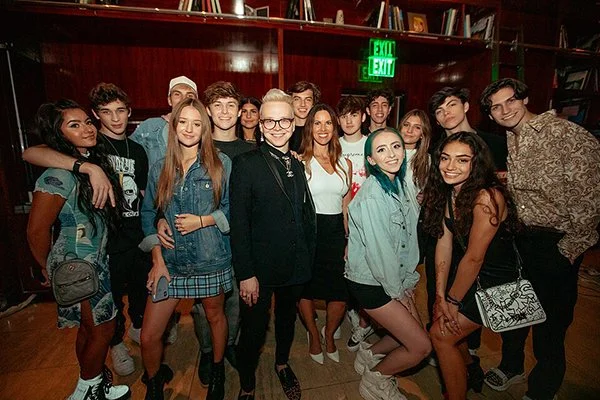
A young man dressed in black surrounded posing with a bevy of other youthful people

Agent Michael Wiest with top social media influencers at a 24 August 2019 film premiere

3 August 2026

Social media has given rise to the influencer, a person who uses their celebrity on social media to endorse and promote products and messages. But the word influencer, and it’s root influence, long predate the advent of the internet.

The English noun influence is borrowed from the French influence, originally meaning an emanation from the stars or an inflow of water, which in turn is from the Latin influere, to flow in (cf. influenza/flu). English use begins in the fourteenth century and is first used in the sense of divine power and inspiration. Here is an example from John Trevisa’s translation of Bartholomæus Anglicus’s De proprietatibus rerum, translated sometime toward the end of that century:

And þe influe(n)s of blisse is þe more worthi, in as moche as þe aungel ioyneþ hym by his owne wille þe more parfitlich to þe soþnes þat may not be chaungid, as Gregorye seiþ.

(And the influence of bliss is the more worthy, in as much as the angel joins him by his own will the more perfectly to the truth that may not be changed, according to Gregory.)

We also see it in the first book printed in English, William Caxton’s 1473 translation of Raoul Lefèvre’s Recuyell of the Historyes of Troye:

Thou hast lasse knowleche now / than thou haddest in thy paryllous yougth and fro whens cometh this deffaulte / is this by the heuenly Influence / yf hit be thus / where is rayson where is equyte

(You have less knowledge now than you had in your perilous youth. And where does this deficiency come from? Is it from heavenly influence? If it be thus, where is reason? Where is equity?)

And in the fifteenth century influence began to be applied to mundane, worldly forces.

The verb, to influence, is in place by the mid seventeenth century. Here is an example from a speech by Oliver Cromwell to parliament on 25 January 1658:

He [the Pope] doth, as always he hath done. He  influenced all the powers, all the Princes in Europe to this very thing, and no man like this present man.

Influencer also appears in the seventeenth century. From George Sikes’s 1662 The Life and Death of Sir Henry Vane:

If men do peep out of this bruitish strain of Life, (the prevailing dispensation of the devil in England, at present) through some awakenings of Conscience, and begin to look after a little moral righteousness in their personal operations, the old serpent can apply himself to them, as their Tutor, Influencer, and Instructor herein; has diet at his board, that will fit their palate.

And in the twentieth century, the field of marketing adopted influencer to refer to those who effect purchasing decisions. Here’s an example from the February 1968 issue of the Journal of Marketing Research:

The role of the child as an influencer of consumer decisions was investigated by studying the interaction between mother and child. Purchase behavior by the mother of a child's preferred packaged cereals was related to the child's assertiveness and the mother's child-centeredness.

Finally, the marketing use of the word led us to influencers on social media and the internet. From Advertising Age, 26 July 2004:

Fan sites and influencer message boards list complaints from park-goers that include broken rides, unkempt parks, lax security and additional charges for high-profile rides. Park executives said premium fees are an industry standard and that emphasis has been put this year on upgrading guest services and rehabbing restaurants and restrooms.


Sources:

Bartholomæus Anglicus. On the Properties of Things: John Trevisa’s Translation of Bartholmæus Anglicus De proprietatibus rerum (before 1398), vol. 1 of 3. M. C. Seymour, ed. Oxford: Clarendon Press, 1975, book 2, chapter 21, 61.

Berey, Lewis A. and Richard W. Pollay. “The Influencing Role of the Child in Family Decision Making.” Journal of Marketing Research, 5.1, February 1968, 70–72 at 70. JSTOR.

Cromwell, Oliver. “My Lord Protectors’s Speech” (25 January 1658). Diary of Thomas Burton, Esq, vol. 2 of 4. John Towill Rutt, ed. London: Henry Colburn, 1828, 358. HathiTrust Digital Library.

Lefèvre, Raoul. Recuyell of the Historyes of Troye. William Caxton, trans. Bruges: William Caxton (and Colard Mansion?), 1473. Unnumbered page. ProQuest. Early English Books Online.

Middle English Dictionary, 17 June 2026, s.v. influence, n.

Oxford English Dictionary Online, 2022, s.v. influencer, n.; 1900, s.v. influence, n., influence, v.

Sikes, George. The Life and Death of Sir Henry Vane, Kt. London: 1662, 80. ProQuest. Early English Books Online.

Stanley, T. L. and Kate MacArthur. “Does Six Sell?” Advertising Age, 75.30, 26 July 2004. ProQuest.

Photo credit: Juice Crate, 2019. Wikimedia Commons. Flickr.com. Licensed under the Creative Commons Attribution 2.0 Generic license.

manosphere

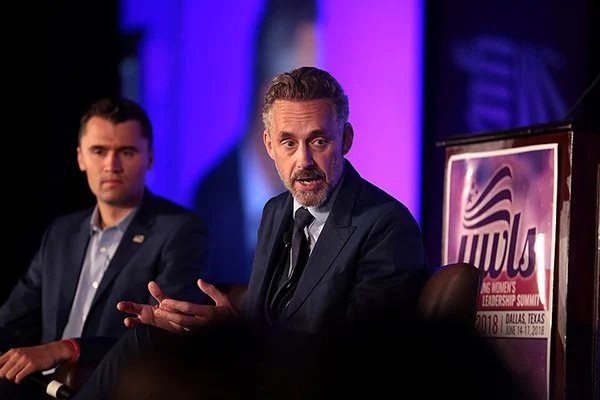
Photo of two men in suits seated on a stage, one gesturing and speaking to someone off camera

Jordan Peterson (right) and Charlie Kirk speaking at a so-called “2018 Young Women's Leadership Summit” sponsored by Kirk’s organization Turning Point USA

31 July 2026

The manosphere is a loose network of social media accounts, blogs, websites, etc. that evince antifeminist and misogynistic views. The term dates to 2011 and starts appearing in mainstream media publications two years later. The word is modeled on blogosphere, which, according to the Oxford English Dictionary, dates to 2002.

The earliest uses of manosphere that I have found are on Reddit.com in the subreddit r/MensRights. That subreddit has a thread started on 21 January 2011 with the title “Women can age beautifully. One of the best posts in the manosphere.” The first post in the thread has been deleted, so the context cannot be exactly determined, but given the nature of that subreddit and the other, surviving posts in the thread, the meaning is generally in line with the standard definition.

Then on 11 February 2011 the following appears in the same subreddit:

It's a little disappointing that so many men resist Game in the manosphere. The way I see it, Game is the yin to MRA's yang—together they take pussy off the pedestal and give men the tools to navigate life an a [sic] safe and effective manner. Why would anyone be against that?

And on 18 April 2011 there is another thread with the lengthy title:

I'm compiling a list of the best articles of the manosphere, starting with The Spearhead: Here's one I rated 9/10 by Novaseeker entitled "Equality Redux" covering the topics of: history of feminism, female privilege, misandry, male spaces, anti-male laws, empowering women at the expense of men.

There is only one post in the thread which contains a single URL, whose link is no longer functioning.

Manosphere starts to be used outside the manosphere in 2013. That year sees the publication of Michael Kimmel’s book Angry White Men: American Masculinity at the End of an Era, which contains this passage:

The development of the Internet has fueled websites and blogs that keep the conversation going and the blood boiling. The emergence of what one writer calls the “manosphere” is a loose collection of websites that sustain the rage; even the most casual tourist will happen upon “a torrent of diatribes, invectives, atrocity takes, claims to entitlement, calls to arms, and prescriptions for change in the service of men, children, families, God, the past, the future, the nation, the planet, and all other things non-feminist.”

The Guardian newspaper picks up on the term on 1 August 2013:

Right now we are dealing with something worse: a rightwing establishment and its lackeys who have managed to convince themselves they are mavericks and who are openly anti-feminist. From Toby Young to James Delingpole to Guido’s bloggers, their putrid offerings are not outside the establishment but part of it. They are just fagging for the Tories.

They may do some childcare and fantasise about PJ O’Rourke, but they encourage the bottom-feeders of the “manosphere” who never seem to realise that feminists not only have relationships with men, but sons too.

And in the United States, a 19 November 2013 article in New York’s Newsday that was widely syndicated in papers across the country has this:

The men's rights movement, which has gained new visibility in recent years thanks to the Internet, is often viewed as a lunatic fringe of women haters. Unfortunately, quite a few websites in the so-called "manosphere" do their best, or worst, to earn this reputation.


Sources:

Bobsutan. “Game for MRAs.” Reddit.com/r/MensRights, 11 February 2011.

“I'm compiling a list of the best articles of the manosphere, starting with The Spearhead: Here's one I rated 9/10 by Novaseeker entitled "Equality Redux" covering the topics of: history of feminism, female privilege, misandry, male spaces, anti-male laws, empowering women at the expense of men.” Reddit.com/r/MensRights, 18 April 2011.

Kimmel, Michael. Angry White Men: American Masculinity at the End of an Era. New York: Nation Books, 2013, 113. ProQuest Books.

Merriam-Webster.com, 2 July 2026, s.v. manosphere, n.

Moore, Suzanne. “This Pre-Emptive Strike Against Equality Comes from a Rightwing Establishment that Wants to Preserve the ‘Manosphere.’” Guardian (London), 1 August 2013, A5. Newspapers.com.

Oxford English Dictionary Online, December 2009, s.v. blogosphere, n.

“Women can age beautifully. One of the best posts in the manosphere.” Reddit.com/r/MensRights, 21 January 2011. [First post in thread deleted]

Young, Cathy. “Neither Side Is Free of Gender Bias.” Newsday (New York), 19 November 2013, A33. ProQuest Newspapers.

Photo credit: Gage Skidmore, 2018. Wikimedia Commons. Licensed under the Creative Commons Attribution-Share Alike 2.0 Generic license.

mog / mogging

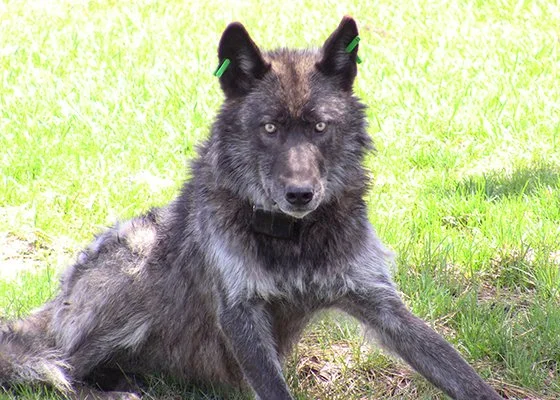
Photo of a male wolf, tagged and fitted with a radio collar

The alpha-male (OR-4) of Oregon’s Imnaha wolf pack

29 July 2026

Mog and mogging have a variety of meanings, but here I’m focusing on one that is etymologically unrelated to any of the others. To mog someone is to exert dominance over them, especially by being more physically and sexually attractive. To cuckold a man is to mog them. The term is usually used in the manosphere to refer to the actions of men, but it is occasionally used in reference to women.

It comes from the acronym AMOG, or alpha male of the group. The acronym dates to at least 10 December 2010 when it was used on the Usenet group alt.seduction.fast:

There's a question. Is it "safe" to have a pivot know that you are doing SS? I've certainly used LJBF women in my AFC past and briefed them honestly. Yeah, I remember using two of them to distract an AMOG away from a target. Not only did I score, the LJBF women had a great laugh fawning on the AMOG. (I later helped one of the women go after *her* target by keeping her kids from interfering.)

Will the LJBF women help me if they' *know* me as a SS/PUA? Might sisterhood prevail? AFC = average frustrated chumpLJBF = let’s just be friendspivot = female friend who acts as validator, a “wing woman”PUA = pick-up artistSS = speed seduction

And we see the gerund AMOGging five years later when it appears in the Usenet group uk.sport.football on 19 December 2005:

They suggest you adopt some characteristics of the Alpha Male, e.g. being the centre of your social group's attention (as a means of generating social proof), or demonstrating confidence enough that you aren't fazed by anything someone says to you; but in general I'd say the material refers to Alpha Males as broadly being just as cunty as Joe's interpretation, hence the AMOGging techniques designed to eliminate them from your immediate surround.

The lowercase amogging is used on the subreddit r/seduction on 26 September 2010:

After I roll back on, target asks me to buy her a drink, and I pull the "you buy, I buy" line. She goes for it. Goes to the bar to buy a drink. Some skeezy 40y/o dude tries to move in on her, she starts talking to him, and I just leave the two of them at the bar. Target then goes to check on her friend, and skeezy 40y/o follows. Obstacle is still pretty down at this point (I feel fucking awful about doing that to her), skeez picks up on it, and locks onto her. I think skeez had some basic PU knowledge, because I overheard him talking shit about me and my game. He even tried amogging me to my target, but I think I'd built up so much social proof by that point, he just ended up looking like a jealous asshole or something. Target was still into me.

The clipped form mogging appears in the subreddit r/GGFreeForAll on 2 September 2016:

You think this place is toxic?

Check out this place. [Link no longer active]

I do have some of the lingo down if you have questions on like what mogging is (not 100% sure). Maxxing and cel are pretty explainable.

They eat there own there. The drama is never ending.

Fun stuff.

And the first response to that post, from gent_the_2nd, explains the term’s origin:

can you explain cope, i sort of get it but not fully

amogging comes from PUAs. it stands for Alpha Male Other Guy -ing. This is the practice of dominating the beta male friends of women you want to sleep with

The verb mog, along with mogging, mogger, and moggee get entries in Urbandictionary.com beginning in 2018.

And this entry in Urbandictionary.com from 9 October 2020 is a rare use of mogging in the context of a woman (but almost certainly written by a man):

When a woman effortlessly and savagely, usually via her ample bosom, outshines other women in the room.

Christina Hendricks is absolutely mogging her costars right now.


Sources:

Jake. “Field Report #1.” Usenet: alt.seduction.fast, 10 December 2000.

Parkes, Allen. “Longest Day of My Life.” Usenet: uk.sport.football, 19 December 2005.

TotesTax. “You Think This Place Is Toxic?” Reddit.com/r/GGFreeForAll, 2 September 2016.

TrollyMcTrollFag. Reddit.com/r/seduction, 26 September 2010.

Urbandictionary.com, 24 May 2018, s.v. mog; 8 November 2019, s.v. mogger; 1 August 2020, s.v. mogging, moggee.

Zimmer, Ben. “Re: looksmaxxing (2016),” ADS-L, 4 July 2026.  

Photo credit: Oregon Department of Fish & Wildlife, 2011. Wikimedia Commons. Licensed under the Creative Commons Attribution-Share Alike 2.0 Generic license.