
16 December 2025
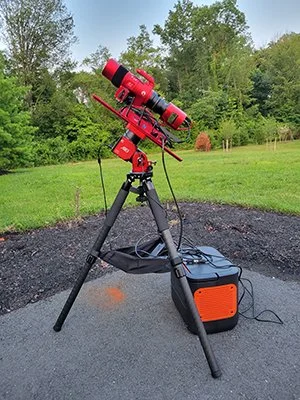
My portable astrophotography rig: a Redcat 51 telescope and ZWO ASI2600MCDuo camera on a ZWO AM3 mount
In case you didn’t know, I not only do word origins and historical linguistics, I’m also an amateur astrophotographer; that is, I take pictures of the night sky. I’ve been doing it, off and on, since 2008. This is a compilation of the images I’ve taken during the past year. All but one of this year’s images were taken from my driveway in Princeton, New Jersey, under Bortle 6 (bright suburban) skies.
I post my images to the Astrophotography section of the Wordorigins website and to Astrobin.com. If you want all the technical details (equipment used, camera settings, etc.), Astrobin is the place to find them, along with images taken by other astrophotographers from around the world.
Astrophotography is more complicated than simply pointing a camera toward the sky. Deep-sky objects are very faint, usually invisible to the unaided eye in light-polluted skies. To get good images, one must have a mount that counteracts the rotation of the earth, allowing you to keep the target still in the frame over long periods. The final images are the result of stacking many exposures of several minutes each, sometimes taken over multiple nights. Above is a photo of one configuration I use. It’s a 127mm (5-inch) reflector telescope on an equatorial mount with a cooled, monochrome, astrophotography camera and filter wheel.
Although some of my images this year were taken with a “smart telescope” (technically dubbed electronically assisted astrophotography or EAA). A smart telescope is very much like simply putting the device on a tripod and telling the computer what to point at and take pictures of. The quality isn’t as good, but it’s still remarkably good for the price and level of difficulty.
Discuss this post
Flame & Horsehead Nebulae in Orion, 21 February
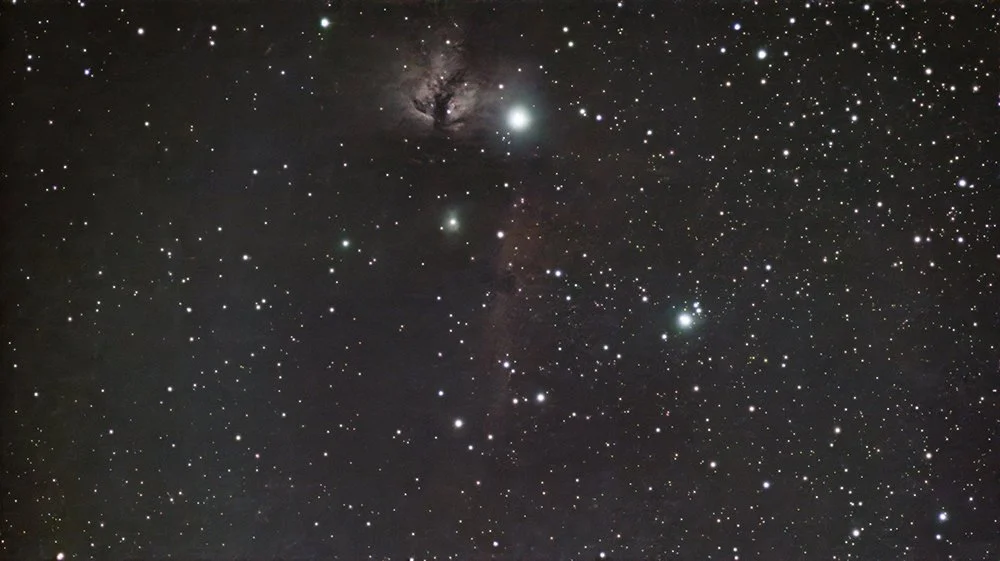
This is a 9 ½ minute exposure with my Dwarf II smart telescope. The bright star is the left-most star in Orion’s belt. Not a great picture, but decent considering the device and the fact that it is less than ten minutes of exposure time.
Pleiades (M45), 21 February
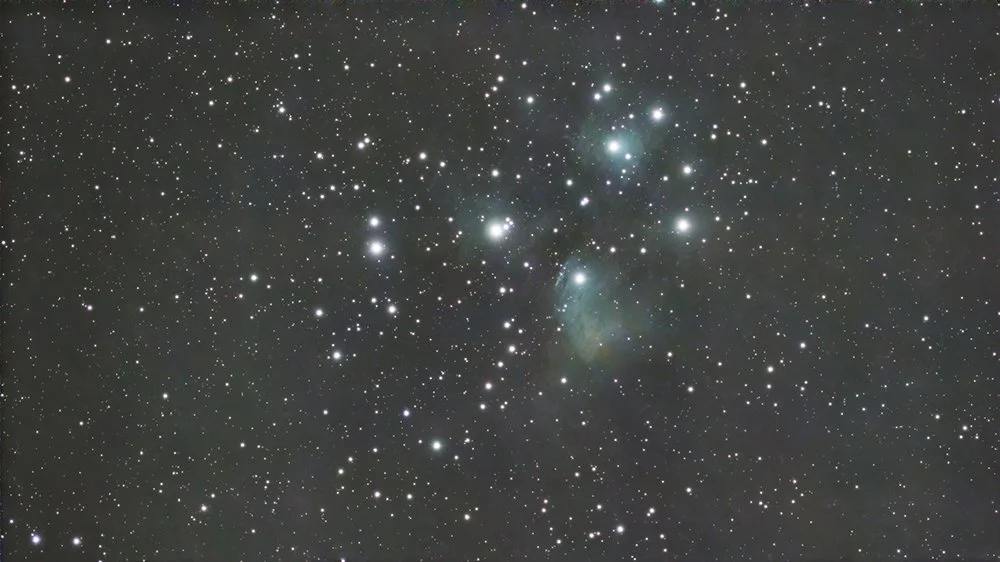
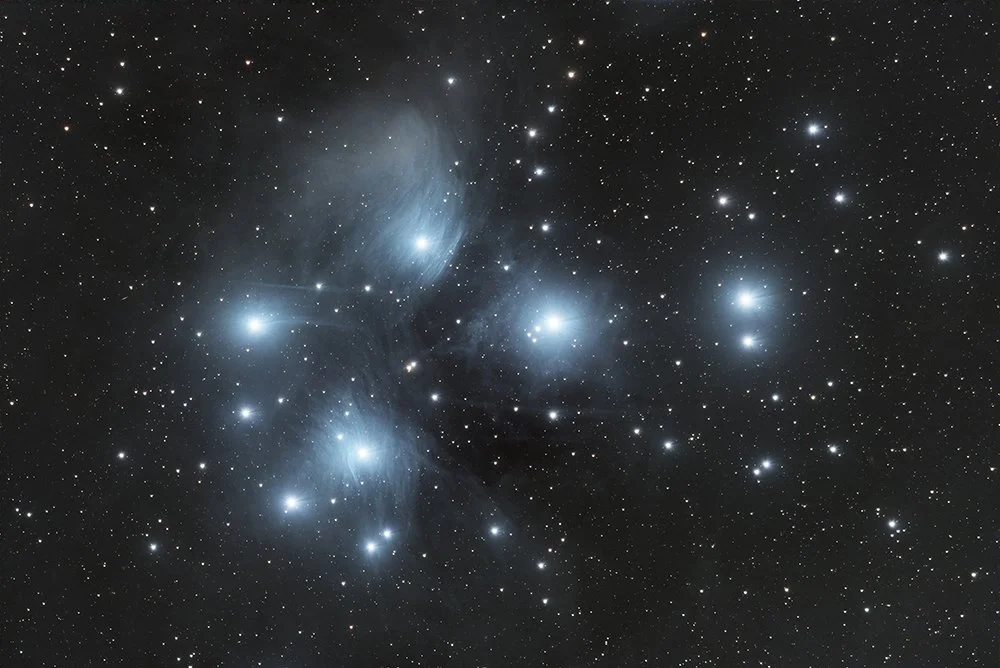
Another photo taken with my Dwarf II, this one with almost 27 minutes of exposure time. Compare it to this one I took in 2023 with my regular rig and 4 hours, 48 minutes of exposure.
Andromeda Galaxy (M31), 21 February
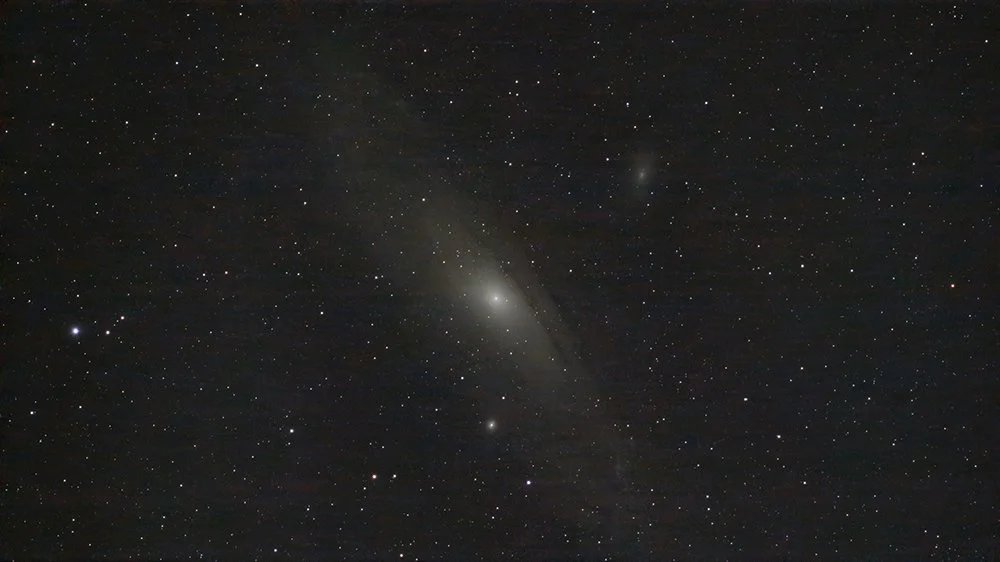
And yet another taken with the Dwarf II on the same night. This one has some 36 minutes of exposure time. Compare it to the next image, which I took with my portable rig later in the year.
Andromeda Galaxy (M31), 21–23 August
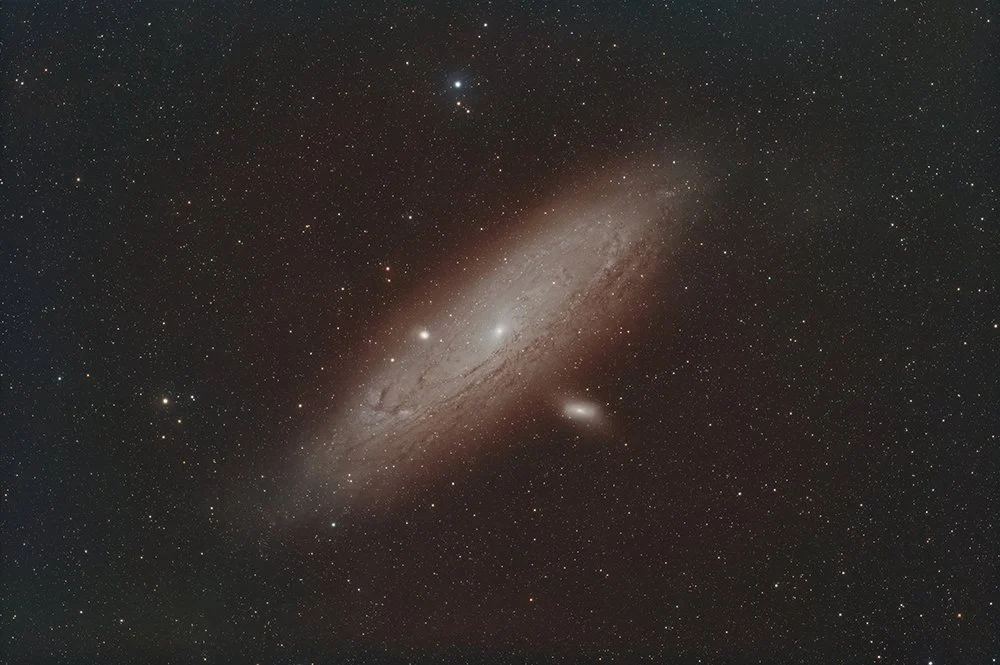
I’m showing this one out of order to highlight the quality difference between a smart and a regular telescope. This one was taken over three nights, for a total of over 13 ½ hours with my portable rig (the small but high-quality telescope and camera shown above). The comparison is unfair because of the big difference in exposure time. Had I taken 13 hours of photos with the smart telescope, that image would be much better. Still, the quality would not have been the same. But keep in mind the smart telescope is much less expensive and a lot easier to use. For what it is, it does a rather good job, but for the best images, there is no substitute (and least not yet; give it a few years and I’ll bet the smart telescopes will be doing a comparably good job).
North America (NGC 7000) and Pelican (IC 5070) Nebulae in Cygnus, 23 June
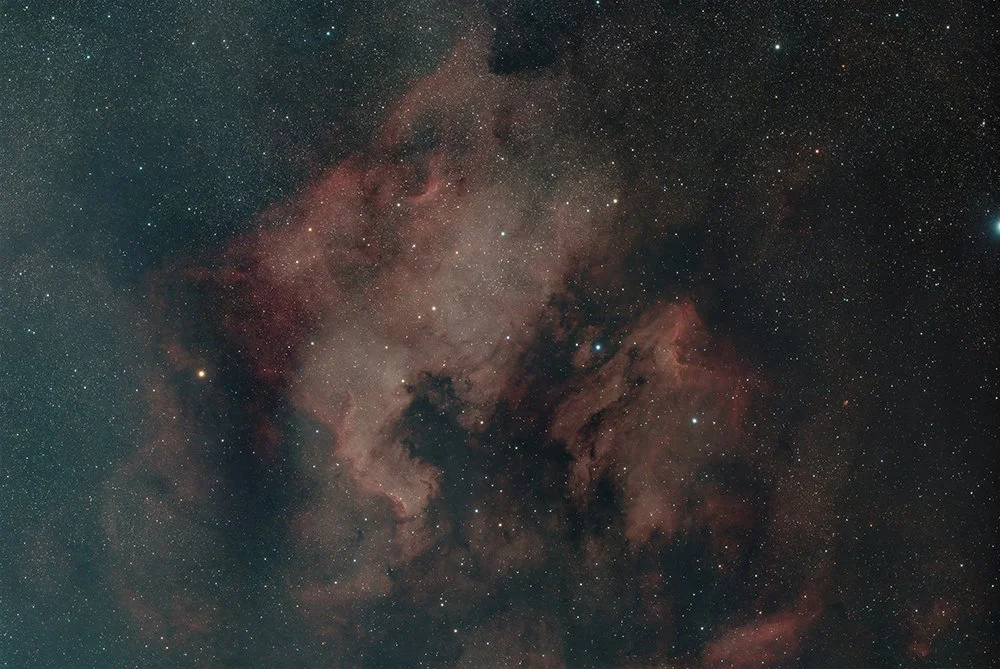
This was my “first light” with my portable rig, which I assembled this year. I’ve had the telescope and camera for a while, but the mount is new. This is only half an hour of exposure. All the rest of the photos for this year were taken with this rig.
Eagle Nebula (M16) in Serpens, 23 June
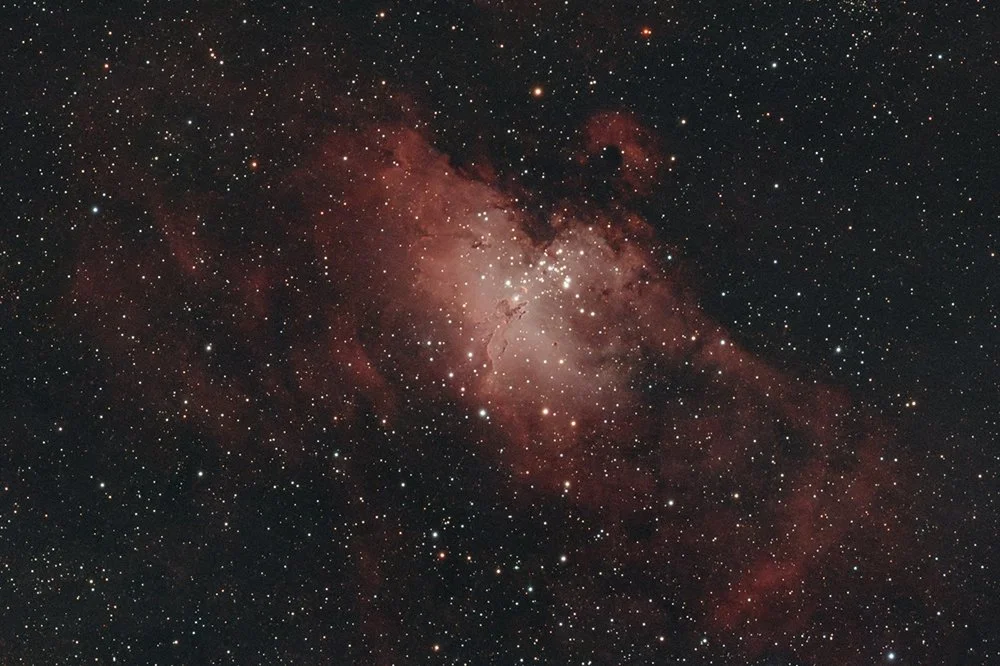
Another shot taken the same night. At the center of the Eagle Nebula are the “pillars of creation,” made famous by the iconic Hubble Telescope image.
Omega (M17) and Eagle (M16) Nebulae in Serpens, 24 June
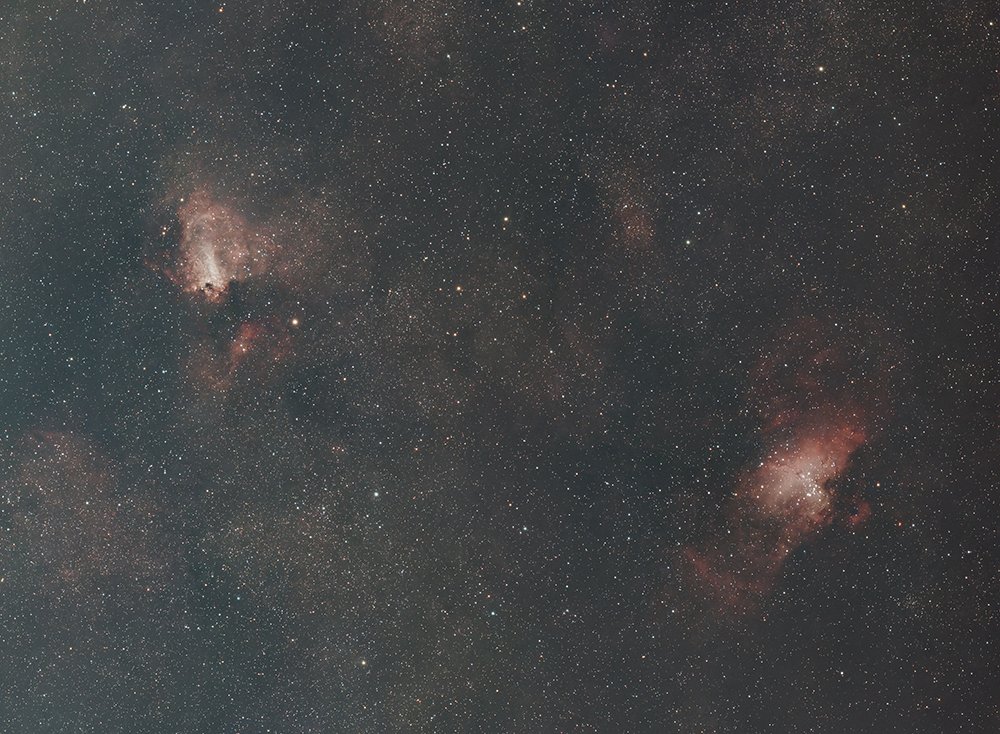
Here is a wider field shot taken the next night.
Elephant’s Trunk Nebula (IC 1396) in Cepheus, 17–22 July
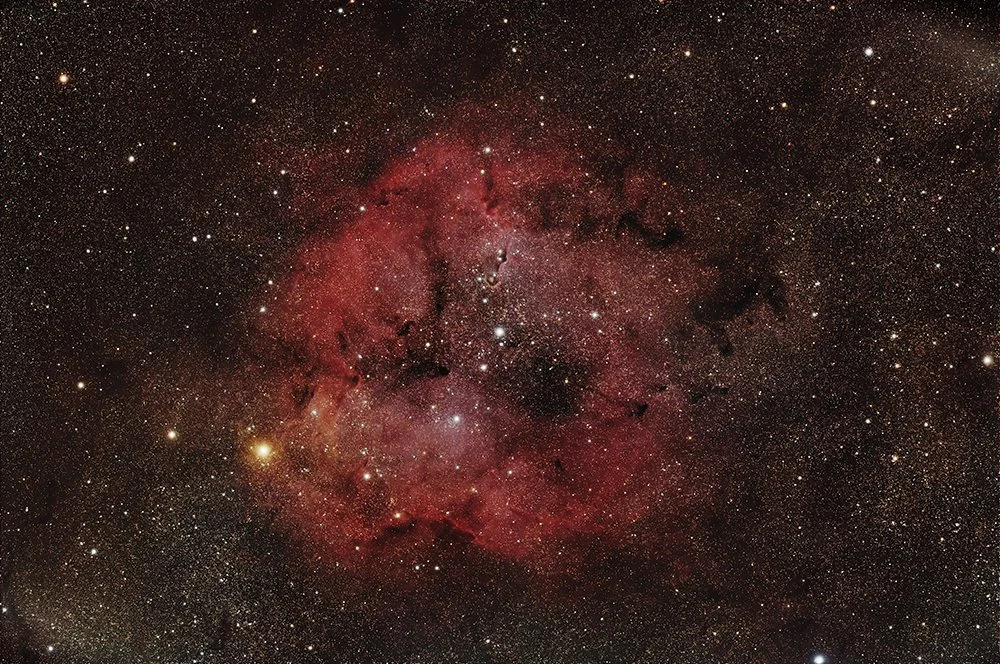
This one was taken over five nights, totaling 14 ½ hours of exposure time. The “elephant’s trunk” is the pillar of gas that is hanging down above the central star.
Bubble (NGC 7635) & Lobster Claw (SH2-157) Nebulae in Cassiopeia, 27–29 July
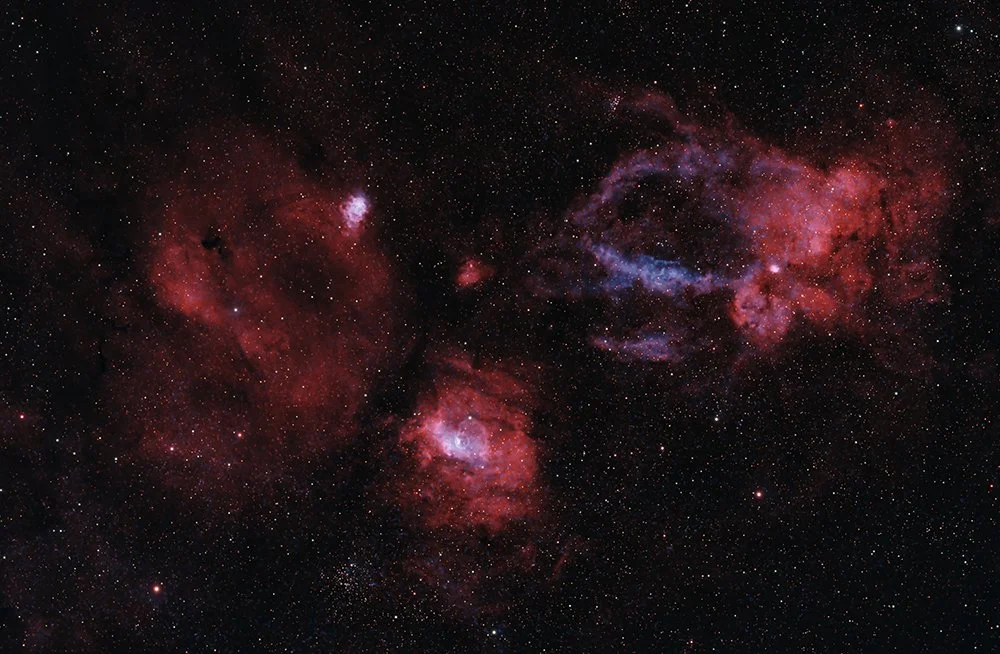
I overdid the color saturation on this one in order to bring out the oxygen (blue).
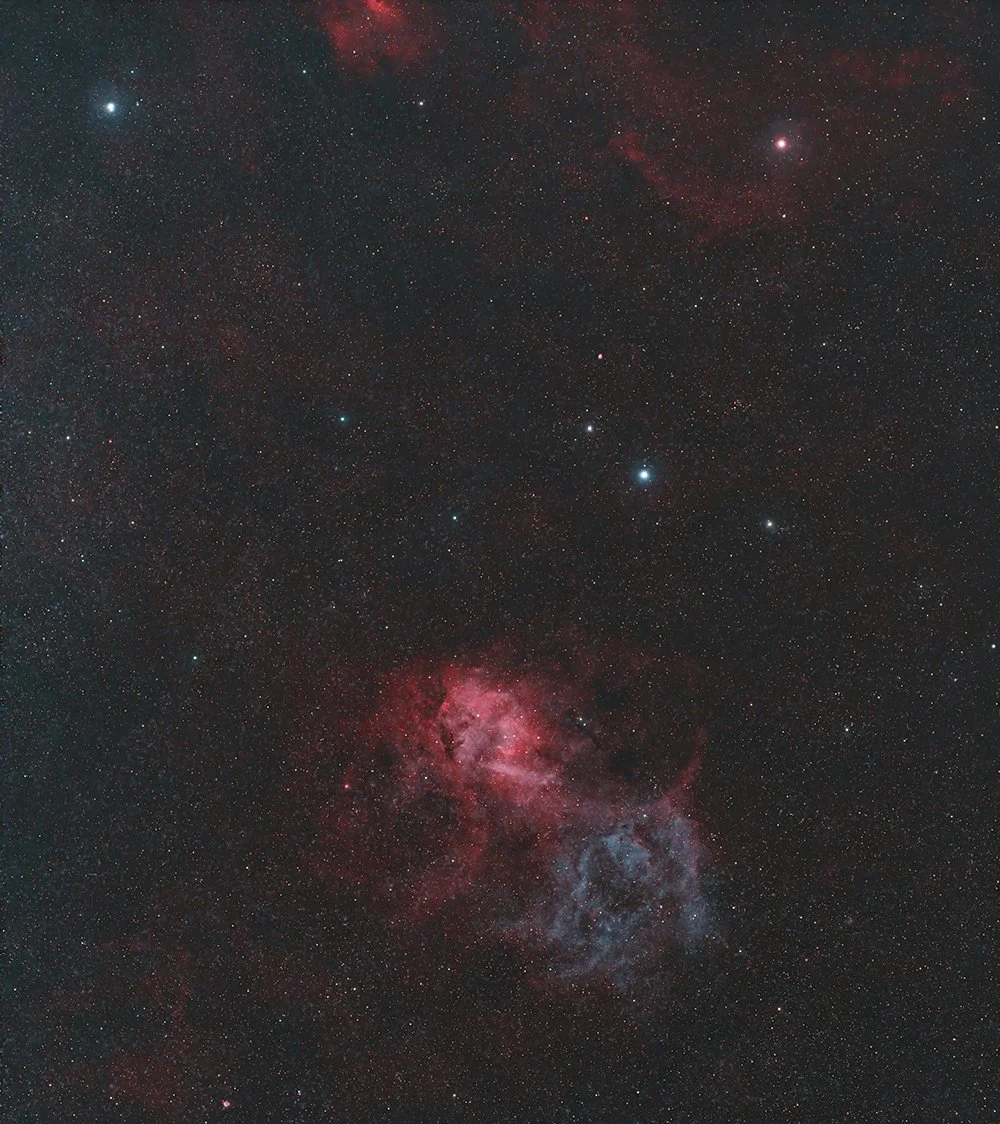
Lion Nebula (SH2-132) in Cepheus, 2–4 August
Gamma Cygni (Sadr) region & Crescent Nebula (NGC 6888) in Cygnus, 7–9 August & 10–12 August
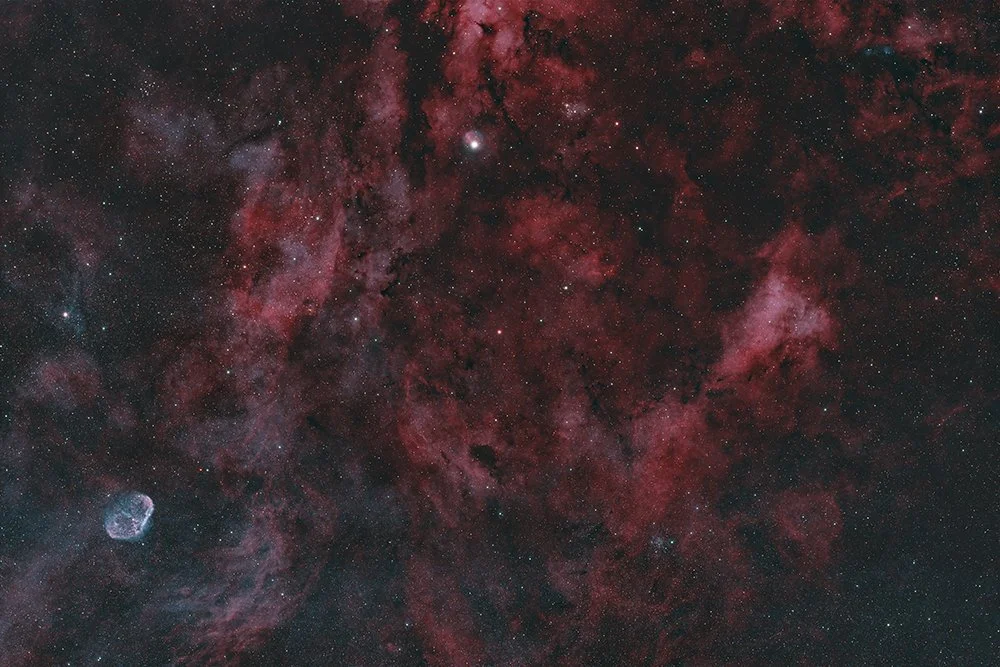
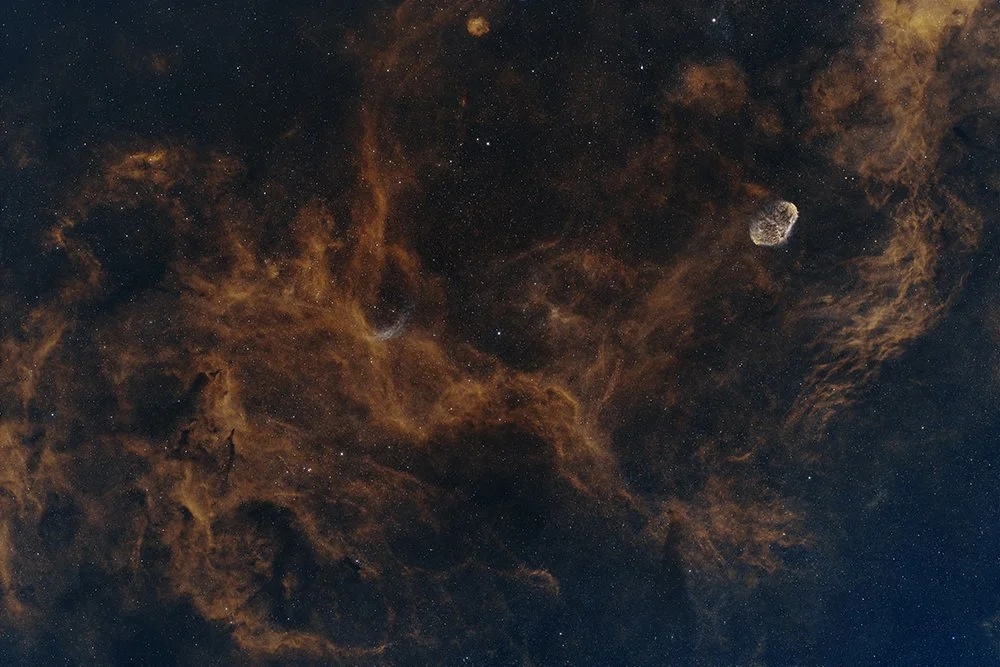
These two images are both of the nebulosity surrounding the star Sadr in Cygnus. The difference in color is from the choices I made in post-processing. All the nebula photos are false-color images. To capture the faint nebulae in light-polluted skies, I use filters that capture narrow bandwidths of light corresponding to that emitted by hydrogen-alpha and oxygen-III ions. The hydrogen shows up as red or brown, the oxygen as blue or white. This would probably have been better as a mosaic—stitching multiple, overlapping photos together—but I was still learning new software to control the scope and hadn’t progressed to that yet (see the last photo in this set).
Triangulum Galaxy (M33), 25 August–1 September
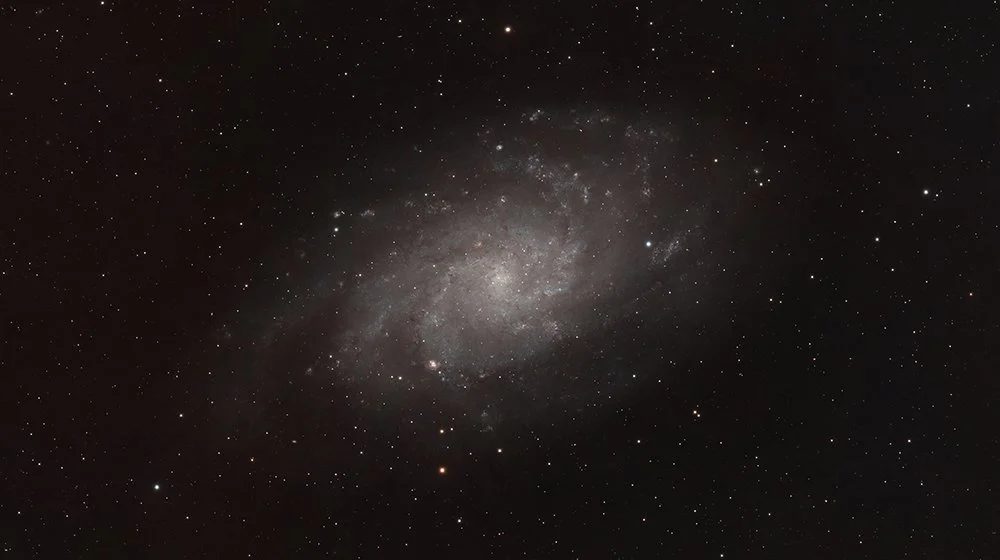
This is the other spiral galaxy in our local group, besides our own Milky Way and Andromeda.
Heart (SH2-190) & Soul (SH2-199) Nebulae in Cassiopeia, 2–8 September
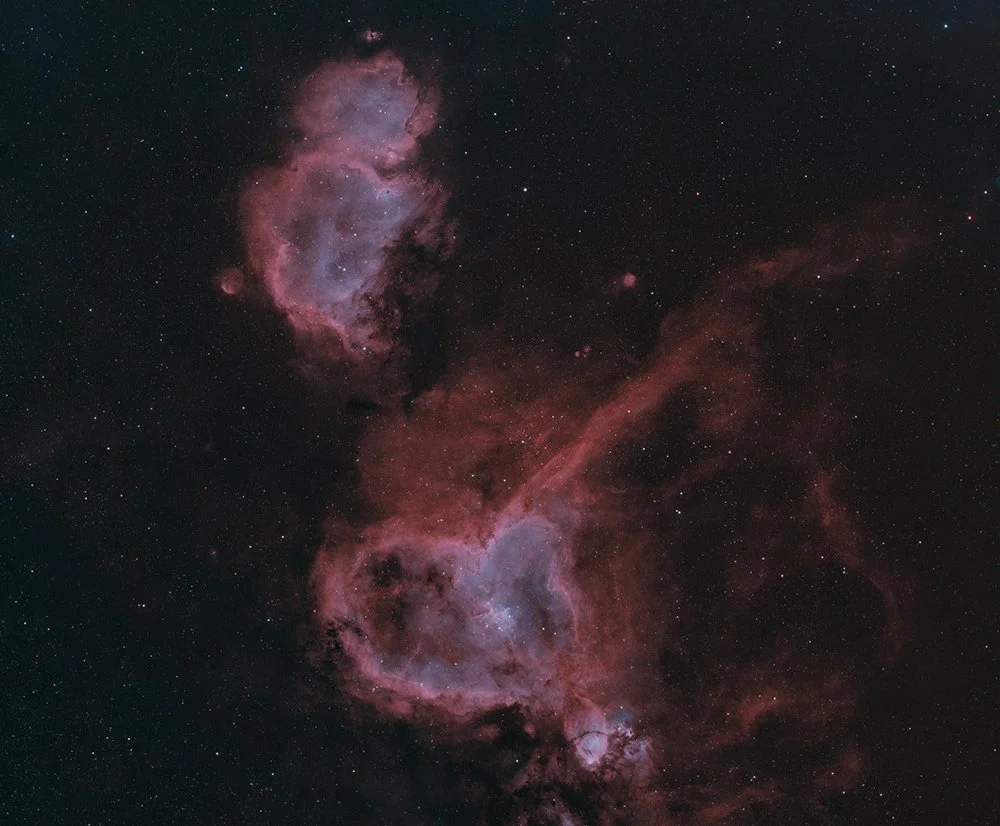
This is a mosaic of two images stitched together.
That’s it for my images of 2025. Hoping for clear skies in 2026.
