
22 July 2026
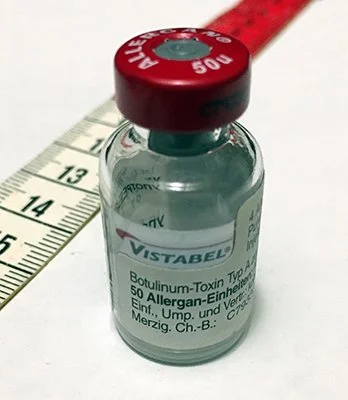
Botulinum toxin is a neurotoxic protein produced by the bacterium Clostridium botulinum. It is generally considered the deadliest poison known to humanity, and in years past had been developed as a biological weapon by the United States, the Soviet Union, and Iraq. Despite its toxicity, it has medical and cosmetic applications, used to reduce the symptoms of dystonia (involuntary muscle contractions) and to reduce wrinkles in the skin due to aging. The disease it causes is botulism, and the name of the toxin is commonly clipped to botox. The clipped Botox has been trademarked, but use predates the application for a US trademark by several years.
The name comes from the Latin botulus, meaning sausage, as the disease was first recognized as coming from tainted wurst. It is a calque of German pharmacologist Johann Andreas Buchner’s 1827 coinage Würstfettsaüre (literally, sausage fat acid).
We first see the term Botulinic acid in Robert Christison’s 1832 Treatise on Poisons:
Although it does not possess an acid reaction on litmus, it forms a soap with alkalis, and is separated again by acids unchanged; and consequently it may be considered a fatty acid, to which Buchner proposes to give the name of Botulinic acid (Würst-fett-saüre). It concentrates in itself the poisonous properties of the crude sausage.
The name of the disease, in the form botulismus, appears in the Eclectic Medical Journal of June 1858:
Botulismus (poisining [sic] by sausages) is recognized by the occurrence of giddiness and stupefaction, dryness and livid coloration of the conjunctiva, angular arrangement of the edge of the pupils, pain in the eye-balls, and paralytic condition of the eye-lids. Comatose drowsiness, burning in the throat, difficulty in swallowing, obstinate constipation, exfoliation of the epidermis, asphyxia, or slight convulsions, precede death.
And we see the form botulism by the end of the nineteenth century. From the Clinical Journal of June 1899:
ILLNESS CAUSED BY THE BACILLUS BOTULINUS.
The only account we have as yet of an outbreak, which has been proved to have been caused by this organism, is due to its discoverer, Professor van Ermengem. The symptoms of the illness, however, are so characteristic that this author has been able to collect a number of accounts of other outbreaks, which were probably due to the same or some similar microbe. This disease or botulism is quite different in its nature from the disease which we have just been discussing. The Bacillus enteritidis acts largely by its great power of causing a general infection, whilst the Bacillus botulinus be- longs apparently more to the toxic type of disease germs, like that of tetanus. The outbreak in which the B. botulinus was discovered occurred amongst the members of a musical society, who supped together; the incriminated victual was a ham.
And we see the phrase botulinus toxin a few years earlier. From the British Medical Journal of 27 November 1897:
The authors think as the results of their investigations that microbes of the coli type have nothing to do with meat poisoning, but that the poison produced by decomposing albuminous substances is due to microbes not yet discovered. From decomposing blood they have isolated by the Brieger-Boer method a very deadly poison. Thus, suspected food should be examined by this method. The authors refer to one suspected case which the examination proved to be a sepsis due to the streptococcus. Botulinus toxin given to animals in nonlethal doses eventually produces a fatal cachexia, with paralysis and degeneration of the parenchymatous organs.
Botulinum toxin is in place by 1923 when it appears in a University of Illinois publication:
Two samples of spinach supposedly related to illness in man, upon examination indicated the presence of C. botulinum toxin. Cultures of the spinach yielded type A Clostridium botulinum.
Finally, the clipped form BoTox appears in a 1981 conference presentation:
The site of action of BoTox is at the pre-terminal cholinergic motor neuro-fibril.
And throughout the 1980s botox makes its appearance in medical journals for treatment of various types of dystonia. From an abstract published in the journal Neurology in April 1986:
Medical or surgical treatment of focal dystonia usually results in an incomplete response or has unacceptable complications. We evaluated local injections of botulinum toxin-A (Botox) to treat focal dystonia.
And in a letter to the journal Laryngoscope published in November 1986:
We recently read with interest the letter in your column from Dr. G. J. Spector. We would like to share our experience using botulinum toxin (BOTOX) for the treatment of “spastic dystonia” as part of a trial of toxin injections for the treatment of other cranial dystonias. The clinical syndrome of “spastic dystonia” includes patients with focal dystonia of the larynx, in addition to patients with essential tremor and other movement disorders of the larynx.
In 1987 doctors started using botox cosmetically, at first to treat paralysis resulting from cosmetic surgery and within a few years for aesthetic purposes. The first application for Botox as a trademark was filed in 1990.
Sources:
Ball, A. P., M. Snow, and R. Paul. “Use of 4-Aminopyridine in Human Botulism” (1981). In P. Lechat, S. Thesleff, and W. C. Bowman, eds. Aminopyridines and Similarly Acting Drugs: Effects on Nerves, Muscles, and Synapses. Oxford: Pergamon, 1982, 297.
Blitzer, Andrew, et al. Letter. Laryngoscope, 96.11, November 1986, 1300–01. Wiley Online Library.
BOTOX (trademark). United States Patent and Trademark Office. Serial # 74126661. Registration # 1692384. Filed: 21 December 1990. Registered: 9 June 1992.
Brin, Mitchell F., et al. “Injections of Botulinum Toxin for Treatment of Focal Dystonia” (abstract). Neurology, 36.4, Supplement 1, April 1986, 120.
Christison, Robert. A Treatise on Poisons, second edition (1831). Edinburgh: Adam Black, 1832, 559. HathiTrust Digital Library.
Davenport, Eugene. Thirty-Fifth Annual Report, Agricultural Experiment Station, University of Illinois, for the Year Ended June 30, 1922. Urbana Illinois: U. of Illinois, 1923, 18. HathiTrust Digital Library.
Durham, Herbert E. “Acute Infections Due to Unsound Meat.” Clinical Journal, 14.7, 7 June 1899, 109–112 at 112. HathTrust Digital Library.
“An Epitome of Current Medical Literature. British Medical Journal, 27 November 1897, 85/2–3. HathiTrust Digital Library.
Oxford English Dictionary Online, June 2016, s.v. botulism, n., botulinum, n., Botox, n., botulinic, adj.
“The Uræmic Convulsions of Pregnant, Parturient, and Lying-In Women.” Eclectic Medical Journal, June 1858, 249–56 at 254. HathiTrust Digital Library.
Photo credit: Pittigrilli, 2023. Wikimedia Commons. Licensed under the Creative Commons Attribution 4.0 International license.
